The panorama on the sunrise side: an awesome view of Malarayat

The quiet panorama on the sunrise side of the farm: an awesome view of Mount Malaráyat and the river below the gap.
Showing posts with label coconut. Show all posts

17 November 2011

Our Own Sinamak

My caretaker, Bukíng surprised me one weekend with vinegar that he made himself,collecting the coconut sap right from the tree and fermenting it for some time by then. It was remarkable that we are now making our own vinegar! It's not rocket science at all, but is quite laborious to make if only for small quantities. We realized it when he emphatically told the cook not to waste it for cooking but just for dipping; I guess if I have to climb a coconut tree everyday to make a bottle, I'll say the same thing!


And since that remark, the cook, May thought why not use it to make our own sinámak?   After all, we just have to add market-bought báwang at sibúyas (garlic and onion) to our own home-grown síling labúyo (chili pepper, below left), lúya (ginger, below right), and pamintáng buô (peppercorn).


Sinámak, as you can see is a wicked concoction of a dipping sauce for any dish you want to add some kick to. It works best for inasál na manók (grilled chicken) or iníhaw na pusît (grilled squid), fried lumpiâ, or any deep fried, crisp fish.


Chili Pepper/Siling Labuyo
Ginger/Luya


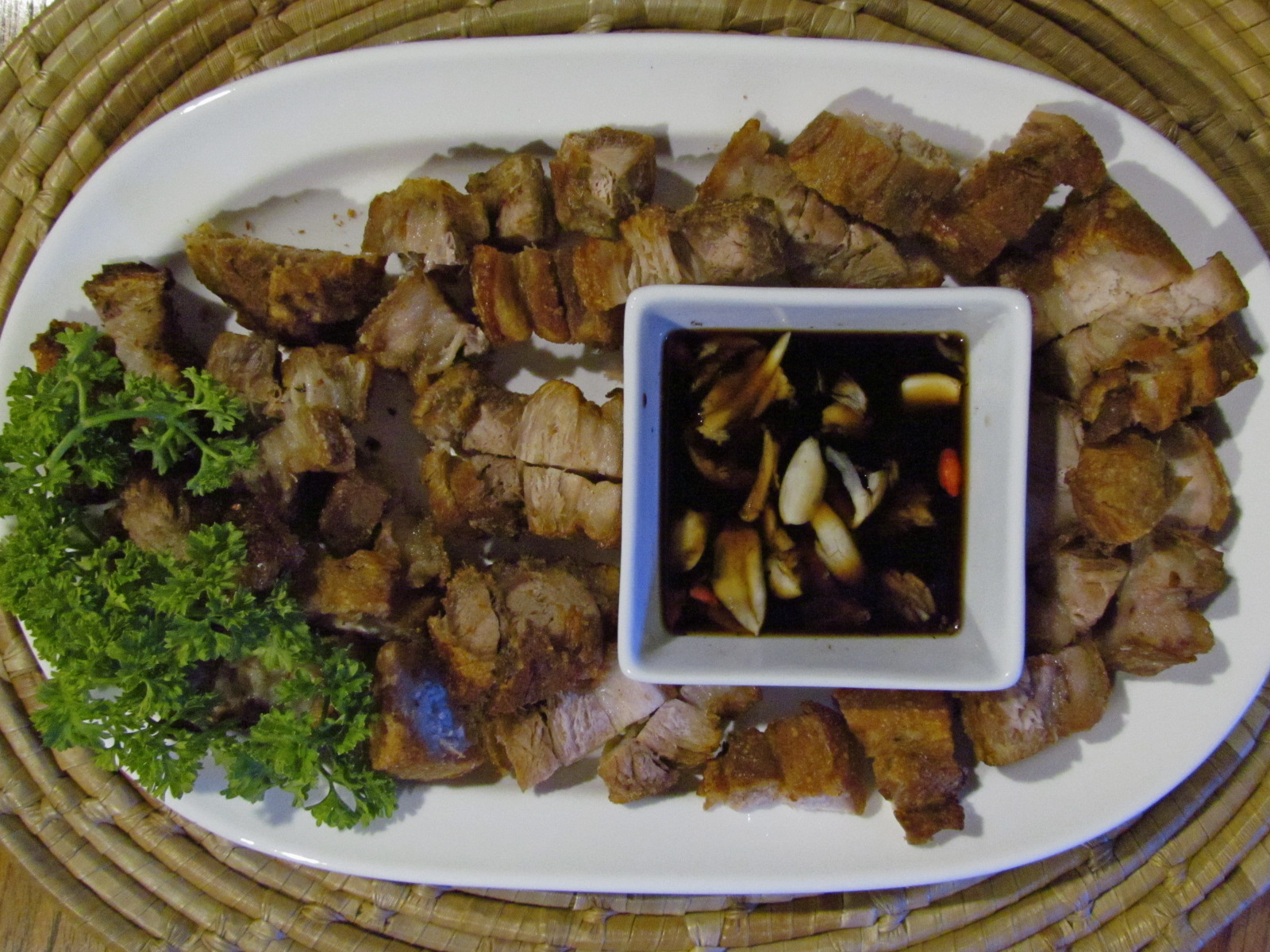
A variation is to add some tóyo (soy sauce) to add flavor to some real killer bagnět (deep-fried pork, below). Just don't forget the Lipitor!


01 November 2011

Suman sa Ibus


My caretaker and his family made súma(above) today, a glutinous rice cake wrapped in young coconut fronds (íbŭs), on the occasion of All Saints' Day, when Filipinos troop to the cemeteries to pay respects to their loved ones who have gone ahead. The market-bought glutinous rice (malagkît) is mixed with kákang gatâ (the first press of coconut cream), then functionally yet artfully-wrapped and tied together before boiling it in water.


It was striking to see that even though my Ilónggô caretaker has no tomb to visit in Lipa, they still hold their traditions dear and keep them alive. And because he and his wife are quite amused that I patronize their traditional foods, they set aside some of the malagkit to make for me the rice version of báye báye (below), that toasty cake they made last July and August after the corn harvest.


17 August 2011

Báye báye


Now, I don't mean to be a food blog but my staff managed to come up yet again with something from the excess corn produce and our usual residual coconuts from all the búco juice I drink. They call it Báye báye, according to them it's an Ilonggo delicacy that's traditionally served during Tódos los Santos. Well, here in Luzón, we proclaim that it is to be prepared after exhausting all possible recipes and its permutations weeks after the corn harvest!


How it's done is first, manually scrape the kernels from the cob (left), then toast the kernels on a pan (sangág). Afterwards, grind the corn (gíling, can be on a food processor but in our case, we used the coffee grinder) and it will look like what's on the bowl on the lower right.

Meantime, you should've prepared niyóg already (upper right) which you will mix with the sinangág na maís, add some muscovádo then pound them altogether (i-bayô) on a lusóng (I no longer know how to translate that, hahaha... it's like a big wooden pestle and mortar, someone remind me to blog about it soon).

The end product will look like the first photo, which is deliciously chewy and incredibly fragrant, I don't know how to explain it. It must be the roasted corn which smells new to me.

I googled about Baye baye and was surprised quite a lot has been written about it, despite it being relatively unknown and inaccesible to many. But most of what I found use malagkît (sticky rice) instead of corn, which shows in the photos; theirs look smooth and, well, sticky. But my staff insists it is also done just like how we did it. So there, my contribution to the worldwide web: Corn Baye baye.

By the way, for the sake of the photo, I garnished the dish with some pinípig which cannot be translated either. Thank God for hyperlinks and Wikianswers!

01 July 2011

Harvesting Coconuts

Búko actually means a young, immature fruit or a flower that has yet to open, and may refer to a variety of plants, not just coconuts. But by sheer profusion and popularity, the term has been so closely associated and often mistaken as the Tagalog of the coconut fruit (and the tree).


The Tagalog for coconut (Cocos nucifera) is niyóg, and if you leave it to mature on the tree, it will dry up, shrink a bit and turn brown. But most prefer to harvest it when it is still young, large and green (right), in its búko stage.


And understandably for good reason! My favorite is "búko juice" which is the cool, clear water inside, then scooping out the gelatinous flesh, all fresh from the shell! It's a defining pleasure you can only have by living in the tropics.


Periodically, magpapakyáw 
(contractors or middlemen) come and purchase all the harvest-able búko in the farm. We have no means to do this on our own: climbing  a couple of hundred trees is pretty daunting already, and some are four- to five-storeys high!


It's fascinating to see the coconut farmers busy with their work. With spikes on their shoes, they climb up the trees with a chain harnessed around their waists, then they go about knocking on the coconuts like it's as simple and easy as a desk job.


The good ones they select, they hook the entire buhîg (bunch?) into some rope, and let it slide down (right), carefully making sure the coconuts don't come down to the ground a-crashing (when we do it ourselves, we always end up with broken coconuts!).


They have to be collected at the foot of each tree and manually transported to the gate where the truck is. Now this smiling worker on the left makes it look so light and easy but the coconuts he's carrying on his pinggâ is as heavy as your two-piece, maxed-out, checked-in luggage!

27 June 2011

Ubod

Sometimes, for whatever reason, we would have one or two felled coconut trees. When we were building, we had to clear some areas and there were a couple of trees, especially coconuts that were in the way.

Now I'm not sure if many people know where the úbod in fresh lumpiâ comes from. I somehow knew before that it's a coconut by-product and figured that, I guess it comes from the coconut itself (which, by the way, is not a nut but that's a totally different story altogether).

It turns out that úbod is Tagalog for pith, the young core of the trunk of the coconut tree (or the banana, whose ubod can be eaten too). On the right, we chopped off the top part of the felled tree (background) and skinned the bark to get the pith (lower part/foreground).

It's very nutritious to eat, fibrous (since this is what will become coco lumber in time), and filling. Imagine: from the roots underground, the tree absorbs water and nutrients, goes up the pith, and into the leaves, the flowers, and into the coconuts. Amazing.

Traditionally, we cook it as lumpiâ filling, sauteed and mixed with some kincháy (something like flat parsley) and small shrimps, to flavor. Anyone out there who has some new recipe to share?