We're still harvesting plenty of kamóteng káhoy so it's time to make one of our perennial favorites: cassava cake! This time, May has perfected grinding the cassava so the cake's texture is flawlessly smooth, unlike the commercially available ones which is usually lumpy. We also cook it in a turbo broiler instead of an oven, which we think makes the entire dish more evenly done. Some we come across have rather thick cakes, which result in sloshy middles.
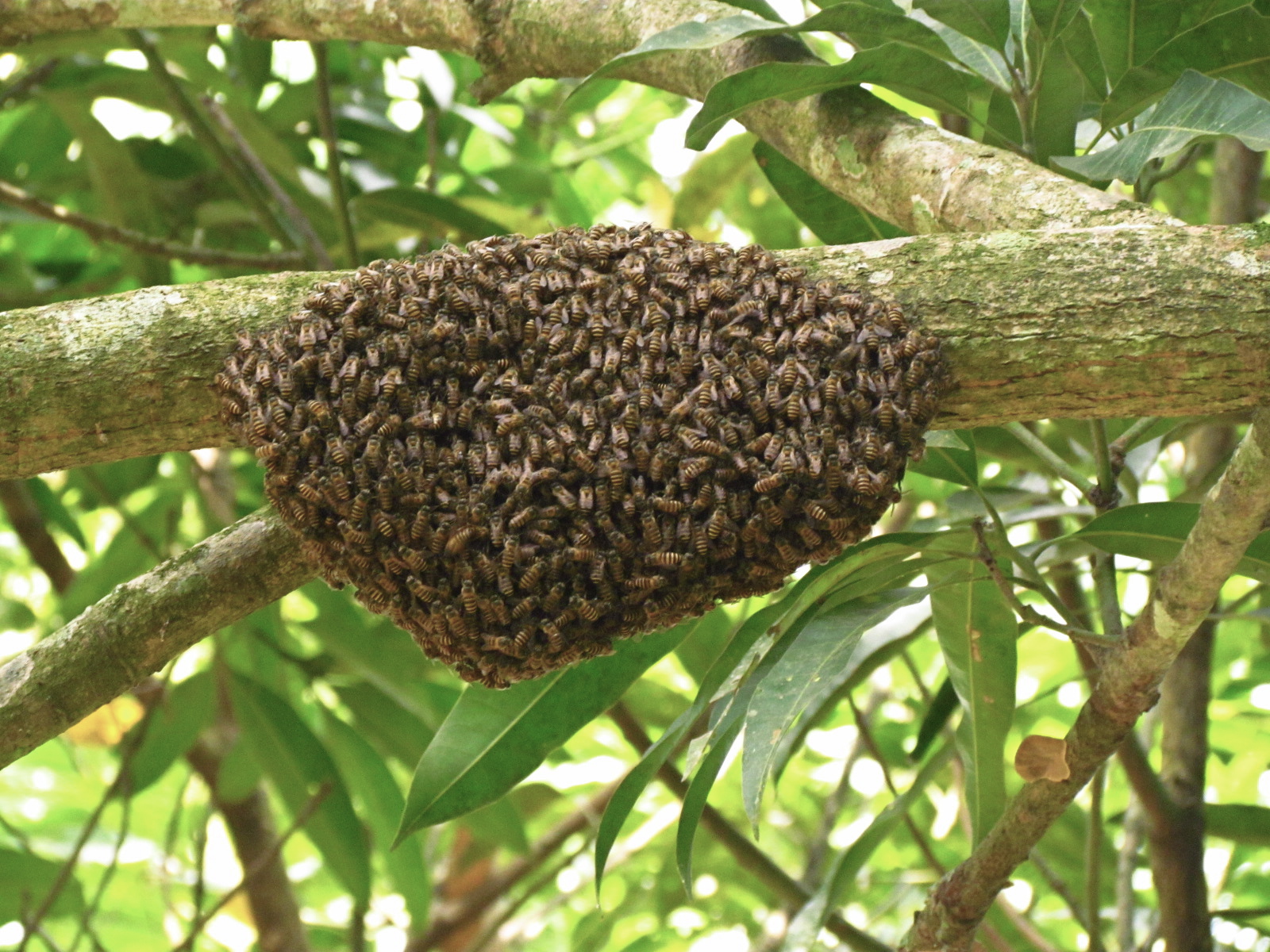
These last weeks, a colony of honeybees have been buzzing around the gardens; another live science class happening literally on my front yard! Admittedly, I don't know anything about them except that they make honey on a honeycomb. Apparently, this colony is making its honeycomb on an upside-down terra-cotta pot amidst some bromeliads.
Where did they come from? Why do they show up now? Where are they the rest of the year? Still so many things to learn...
Sunday is barbecue day! Dining alfresco in the gardens with the grill nearby is one of our simple joys living in the farm. We grill practically anything: meats, fish, veggies, bananas even! To enjoy this lifestyle though, you need a steady supply of charcoal. So... we make our own!
Admittedly, this is one that I really had no clue we could be able to do in our place. I don't need to share any longer where I first thought they came from, but it turns out the locals use plain firewood (the most common in our area being Mádre de Cacáo [Gliricidia sepium]) to be self-sufficient.
But it is no easy task. It is laborious, yes; but it is also imprecise and calls for much experience to flawlessly and efficiently turn your firewood to charcoal.
So Mang Dimô, one of the better mag-uúlings in our bárrio, works in our place and makes it for us. He makes a pit in the ground for an on-the-spot, built-in earthen oven to put the chopped firewood and cover it with coconut palápas (fronds) topped with soil (or something like that, that's how I understand it). Then he lights a fire on one end and leaves it for some days until he sees a signal that it is already done.
Eventually, he'll block all the air by dumping dirt around the pit until the embers die and let the charcoal cool off. In the end, he shovels them out and sacks them for storage.
Home-made, chemical-free charcoal briquettes to grill our free-range chicken with veggies grown by us, for Sunday lunch in the garden, under the mango tree: priceless...
Some days back, I was amused no end to find some loofah sponges drying in the wooden walkways. When I started the farm, I admittedly dreamed of harvesting truckloads of coconuts or making our coffee beans well-known, but never did it cross my mind we will ever come up with loofah sponges!
Yes, they're from our own produce! I do have an inkling that it comes from a plant but it's different if you walk through your yard, knowing you'll find vegetable patches with gourds, but instead you stumble upon a bath accessory.
Believe it or not but loofahs are mature patóla (sponge gourd), the same vegetable we eat with misuă soup. To cook the gourds, you have to pick them while they're still young. But if you leave them on the vine until they mature and let the skin dry up, you'll end up with the sponge that we know. That's it! It's that simple.
It's awesome that at this age, there are still a lot of simple and mundane things that we do not realize are actually very elementary. I grew up seeing these packaged and labeled and marketed and distributed. Conversely, the locals might wonder why my curiosity is so piqued by something that they actually consider wastage (from patola that was not picked). Wait until they see I actually blogged about it!
I would periodically browse through amazon.com's site and window-shop for good deals, enjoying going through some selected pages as if I'm leafing through real books in a bookstore. I'd put them on my shopping cart after but won't actually purchase until I'm certain someone can bring it here to the Philippines if I have it mailed to family in California. Sometimes, the deal gets taken and their system will replace it with a pricier equivalent.
For some reason, this National Geographic book is one that's been parked for a long time and never made it to the virtual check-out counter. I've not been to the US for some time, for one. I guess I've also just forgotten about it. But to my sheer excitement, I found a clean and marked-down copy some months back in Book Sale in my neighborhood grocery!
It is sumptuously illustrated, with awesome botanical prints in every single turn! It is a romantic gardener's prized book, with rare and delightful visuals that would fascinate you just as much as the plants themselves. Since I had it, I've been trying to get another copy with the intent of tearing off the pages and framing them as wall decór!
The author, Catherine Herbert Howell selects important historical plants that shaped our present culture and lifestyle today: wheat, rice, sugarcane, tobacco, tomato, cannabis, and orchids, just to name a few. It explains the plants in the context of parallel historical events to help the reader better understand and appreciate just how important and influential plants really are in our daily lives. There are even timelines (below), sidebars with historical notes, striking quotations that would make us see history from a new point of view.