Attractively-ripe for picking are these wicked-looking chili peppers, so red you can see it from a mile away! Our staff, Edwin happened to see this chili type among condiments that were brought along some grilled items one weekend. He "connived" with Lorie to swap it with our homegrown local chili (síling labuyo) so he can let it dry and use this one solitary piece as binhî.
Now, it's two dozen small bushes fruiting with scores and scores of chili pepper!
My caretaker, Bukíng surprised me one weekend with vinegar that he made himself,collecting the coconut sap right from the tree and fermenting it for some time by then. It was remarkable that we are now making our own vinegar! It's not rocket science at all, but is quite laborious to make if only for small quantities. We realized it when he emphatically told the cook not to waste it for cooking but just for dipping; I guess if I have to climb a coconut tree everyday to make a bottle, I'll say the same thing!
And since that remark, the cook, May thought why not use it to make our own sinámak? After all, we just have to add market-bought báwangat sibúyas (garlic and onion) to our own home-grown síling labúyo (chili pepper, below left), lúya (ginger, below right), and pamintáng buô (peppercorn).
Sinámak, as you can see is a wicked concoction of a dipping sauce for any dish you want to add some kick to. It works best for inasál na manók (grilled chicken) or iníhaw na pusît (grilled squid), fried lumpiâ, or any deep fried, crisp fish.
Chili Pepper/Siling Labuyo
Ginger/Luya
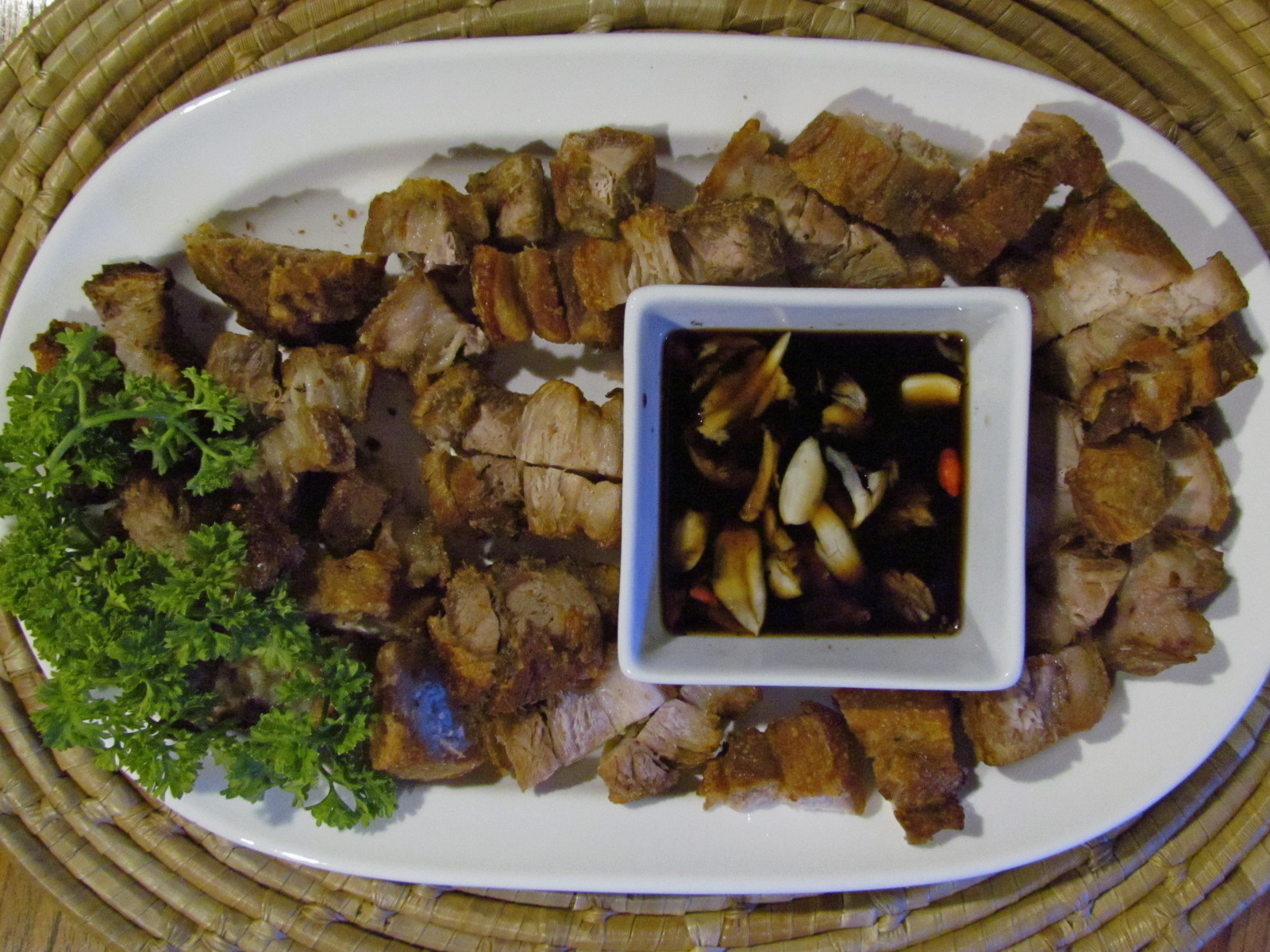
A variationis to add some tóyo (soy sauce) to add flavor to some real killer bagnět (deep-fried pork, below). Just don't forget the Lipitor!
We're about to harvest peppercorns again, it's that time of year when the vines are drooping with this all-important spice that were among those that triggered explorations in the 15th and 16th centuries. We in the tropics kinda take spices like this for granted, just as ginger which gives immense flavor to a lot of dishes we regularly eat.
And I only learned when I had the farm already that white pepper and black pepper comes from the same peppercorn, except they're just picked at different stages. If you pick them while they're green, just as how the berries above look like, you can either consume it fresh while tasting mild and fruity or dry it for some days then crush it and mix with olive oil or brine.
When you pick them instead some weeks later, just when it's about to turn red, leave them to dry until they shrivel and turn black (right). When you grind it on a peppermill, you'll get black pepper, the most flavorful of all.
On the other hand, if you missed out picking some and they've turned ripe and red on the vine, you can soak the berries in water with salt for some days. This will dissolve the outer shell and will effortlessly make the white inner seed come out. Leave it to dry and it becomes white pepper when it's ground.